B2B Blogging Excellence

I was privileged to moderate the BtoB magazine Social Media Awards Breakfast in New York this week. There I got a chance to meet some remarkable people who took chances on social marketing before it was fashionable and won. I first noticed Jim Cahill’s blog four years ago, so it was a particular pleasure to meet him and hear his story.

Jim CahillIt took two years for Jim Cahill and  Deb Franke to convince the management at Emerson Process Management that a blog was a good idea. Their reticence was understandable. It was 2005, and blogs were widely perceived to be the domain of teenage diarists and scandal-mongers. Why would anyone want to get mixed up with that? And why would they want to read about equipment that manages large industrial plants?

They persevered. Some technology copies were creeping into the blogosphere at the time and clearly enjoying good results. Cahill and Franke eventually overcame objections by arguing that, as communications people, they understood the pitfalls and how to manage them. Emerson Process Experts was born.

Four years and a more than 500 entries later, Cahill is enjoying a new job as head of social media at Emerson Process Management. Process Experts was named Best Corporate Blog by BtoB magazine in 2010 and Cahill is now leading the company’s charge into Twitter and Facebook while institutionalizing best practices among all the Emerson Process Management divisions.

The blog has brought numerous business opportunities into Emerson, including an invitation to bid on a large, new plant that could total hundreds of millions of dollars. “I have the e-mail from that company on my wall next to a sign that asks ‘Is there any value in blogging?’” he laughs.

Even after four years, Emerson Process Experts remains an enigma in a heavy industry that has done little with social media. Topics like “Sensing Liquid Levels with Vibrating Fork Technology” may cause the average visitor’s eyes to cross, but the elite engineers who run giant process control systems can’t get enough of this kind of technical wisdom.

And for a blog this specialized, the traffic is pretty impressive. About 2,000 visitors stop by on an average business day and 15 to 20 messages land in Cahill’s inbox every week. While most are routine, a few gems inquire about business opportunities. After replying with a thank you message, Cahill forwards them on to the sales team.

Search Engine Magic

One reason is the search engine magic that blogs deliver. Search on “process control” or “process management” and Emerson ranks in the top five results. Even rarely used terms like “compressor surge control” deliver Emerson on Google’s first page. The secret is the lack of competition. As an established presence in a community with few other bloggers, Cahill is a big fish in a small pond. And as we know, Google loves blogs.

Cahill approaches his job with a reporter’s eye. He isn’t an engineer, but with more than 20 years at the company, he understands the lingo and is able to write in the customer’s language. “When I pass people in the hall, I’ll ask if they had any recent customer interactions that were interesting,” he says. “I’ll dig into those stories and use the language that the experts used to solve the problem. Those stories are rich in the keywords that customers use.”

His advice to prospective b-to-b bloggers: “Be prepared to stick with it for a while; it takes a couple of years to build up your presence. Listening is a key skill. Blogging isn’t just pushing out information, it’s responding to the interests of your market.”


Thanks, also, to my other panelists: Kirsten Watson of Kinaxis, Mary Ann Fitzmaurice Reilly of American Express OPEN and Petra Neiger, whose team at Cisco Systems created the wonderful My PlanNet simulation game for network managers.

A Quick Fix for the Latest WordPress Virus

I spent several frustrating hours this weekend trying to recover from a nasty virus that has hit WordPress installations on Network Solutions and Go Daddy, which is my hosting service. After wasting many hours fiddling with wp-config files and backing up and restoring databases, I hit upon a simple solution this morning that appears to have restored my three blogs to their former glory. Maybe it will help you.

This virus is characterized by the insertion of a long string of seemingly random characters at the beginning of PHP files like the one depicted below. These files are scattered all over your WordPress directories and there’s no telling how many have been infected. You need to remove the malicious code from every PHP file to restore your system, and there could be hundreds of files.

Rogue code in WordPress

First, the disclaimers: I’m not a programmer and I can’t guarantee that this solution will eradicate the virus once and for all. It’s possible that the creeps who developed it have hidden code somewhere to resurrect it at a later point, so I will post an update few days from now. Also, you should back up your database before attempting any recovery. It’s probably also a good idea to back up the infected files to a safe directory on your computer in case something goes wrong.

That said, here goes. This fix is for Windows, but the Mac version should be pretty similar:

1. You’ll need to download and install two open-source programs –Filezilla and Notepad++ – before you get started.

2. Open Filezilla and connect to the FTP server where your WordPress installation is located.

3. Now you’re going to create a filter in FileZilla to download and upload only PHP files. This will save you a lot of time because you won’t be sending large image and audio files back and forth. Go to “View –> Filename filters..” and choose “Edit filter rules…” Create a new rule called “PHP” or whatever you want. In the “Filter conditions:” drop-down menu, select “Filter out items matching none of the following.”  In the space below that, choose the drop-down menus “Filename” “contains” and type “php” into the box. See screen grab below.

Setting up FileZilla to filter PHP files

4. Then – and this is important – uncheck the box that says “Filter applies to: Directories.” If you don’t uncheck this box, FileZilla will only download files in the root folder and miss all the sub-folders. Click OK.

5. Back in the “Directory listing filters” dialog box, check the boxes next to your new PHP filter name in both the “Local filters” and “Remote filters” columns. Click OK. Your file transfer filter is ready.
PHP filters selected=

6. In the “Local site:” window on FileZilla, create an empty directory on your computer where you can store the PHP files you download. In the “Remote site:” window, navigate to the directory containing your blog. This will be the one with the folders called wp-admin, wp-content and wp-includes. You actually won’t see those folders at the moment because your filter is on. If you want to check, temporarily disable the PHP filter to be sure you’re in the right directory.

7. In the “Remote site:” window, select all files (CTRL-A), right-click and choose “Download.” The PHP files will start downloading into the new directory you created, preserving the file structure of the server. This should be pretty fast, because you’re only downloading text files.

8. Once the download is complete, open an Explorer window and navigate to the directory on your computer where the PHP files are located. Right click and choose “Open with…” and then navigate to the Notepad++ directory and choose the file called “notepad++”.  Select this as the default for opening all PHP files.

Notepad++will open with all the files you’ve selected in separate windows. Flip through the windows until you find one containing the rogue code at the top.

9. Select all the characters between the first two occurrences of the “<?php” characters. Include trailing spaces.
In  Notepad++, choose “Search –> Find in files…” The dialog box that pops up will look like the one below. The text you selected should already be inserted into the “Find what :” field. Delete anything in the “Replace with :” field. Then choose the navigation button to the right of the “Directory :” field and navigate to the folder containing your PHP files. Click OK. The program will respond with the challenge of “Are you sure you want to replace all occurrances [sic] of…” Click OK. Notepad++ will churn away for a few seconds and then show you how many files it has changed. The number may astound you.

10. If all has gone well, you should still see part of the rogue code in the window in front of you. This is because Notepad++’s  “Find what :” field can’t hold all the characters you need to replace. So you’re going to have to run another find and replace. Simply select the remaining bad code and repeat the previous step to find and replace all incidents in the files. If all has gone well now, the file in front of you should be clear of all bad code. Save that file and any files that are open in other windows and exit Notepad++.

11. Go back to FileZilla and upload all the PHP files, being careful to choose the same directory from which you downloaded them originally. When the challenge box pops up, specify “Overwrite” and “Always use this action.”

Try to open your site again. It should be back to normal. If it isn’t, upload the bad files you had stored in a separate directory and try something else, because this obviously wasn’t the bug you had!

If the fix works, be sure to change your database and WordPress passwords. And let me know either way whether this did the trick!

How to Conduct a Great Interview, Part 2

David Frost interviews Richard NixonLast week I talked about the art of the interview, an essential skill in creating content that generates traffic and visibility. (Be sure to read the advice of others who contributed comments to the blog entry). The first part of this two-part entry talked about preparing for an interview. Now let’s look at what to do when you sit down with your subject or begin the phone call.

Be Conscious Of Time – I almost always ask interview subjects how much time they have. This helps me plan the pace of the questions and also makes sure that I get to the critical ones. If you’re expecting an hour and your subject has only 15 minutes, you need to adjust quickly. If you need extra time, ask for it up front. If the subject turns you down, ask again later in the interview when he or she is hopefully more invigorated about the conversation.

Ask About the Subject’s Background – People like to talk about themselves, so indulge them with a question that they are happy to answer. I’ve found that the simple question, “Tell me about yourself” is a great conversation-starter.

Avoid Yes/No Answers – Instead of asking, “Are you satisfied with your progress this year?” use “Tell me how your progress this year compares to your expectations.” Avoid questions beginning with “do,” “will,” “are,” “and “should,” and instead use questions beginning with “what,” “how,” “why” and “describe.”  Asking someone to “Tell me about…” gives them no choice but to share an experience.

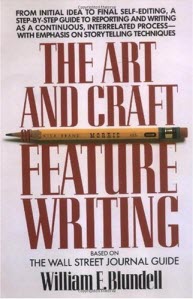
Invite Stories – I once heard former Wall Street Journal feature writer Bill Blundell give advice I’ll never forget: “Write in pictures.” In other words, tell stories that readers can visualize in their minds. Storytelling is the most powerful form of human expression. Stories turn abstract ideas into useful examples. Ask the subject to make the topic real by citing examples or personal experiences.

Don’t Be Afraid To Ask The Same Question Twice – This is particularly true in an interview that concerns a controversial subject. Executives are media-trained to answer the questions they want to answer rather than the questions they’re asked. If your subject is evasive, ask the same question a different way. Sometimes you can coax someone into answering a difficult question by feigning ignorance: “I’m sorry, I didn’t follow that. Can you dumb it down a bit for someone like me?”

Control the Interview– You need to dictate the pace and topic of the interview. If the subject rambles or goes off course, cut her off gently whenever you can get a word in. Even if you back off a bit to let her finish the thought, you’ve sent a subtle message that it’s time to move on.

Be Empathetic – Chances are your subject is pretty passionate about the topic you’re discussing. Let your behavior reflect that interest. Smile when she smiles and shake your head when she relates a tale of woe. This isn’t misleading; it’s simply reflecting back a person’s feelings in a way that helps to draw them out. People like to talk to responsive listeners.

Ask For Closing Thoughts – The longer people talk, the more comfortable they are. This is why the best quotes often come at the end of the interview. When you finish your questions, give your subject a chance to summarize her thoughts or restate an important point. One good tactic is simply to ask, “Is there anything I missed?”

Here are thoughts on a few common questions:

Should You Use A Tape Recorder? These days, the answer is increasingly yes because you want the latitude to publish the interview as a video or audio podcast. That said, recording devices can put a damper on a conversation. Once you start recording, put the gadget aside and don’t look at it. You want your subject to forget about it as quickly as possible. Also, most states require that a person audibly consent to be recorded. Be sure you get that permission on tape.

Should You Go Off the Record? This question is complicated by the fact that “off the record” means different things to different people. Technically, “off the record” means the information can’t be used under any circumstances, which makes it of little value to you. However, people often use this term when they really mean “not for attribution.” I rarely agree to off-the-record terms but I will go on background if the information is important. It often turns out that you can negotiate the use of background comments if you paraphrase them appropriately.

Approvals – Many people ask to approve an article before it’s published. I let the context be my guide. Very often, both interviewer and subject have the common goal of making the speaker look good. In that case, I see no problem with letting someone review their comments for accuracy. However, if the topic is controversial or if the speaker is a celebrity or public official, no way. Those people know the rules. In any circumstance, I advise against giving full editing access. Confine the subject’s revisions to statements of fact.

Those are some of my best practices. What are yours? Post your advice as a comment.

How to Conduct a Great Interview, Part 1

My last couple of newsletters have been pretty high level, so I thought I would come back to earth and devote the next couple of issues to something a little more practical: how to conduct a successful interview.

I’ve probably conducted 4,000 to 5,000 interviews in my 30 years as a journalist and have learned a few tips for making them go smoothly. For many people, interviews are intimidating and scary but they don’t have to be.

Interviews are one of the most popular ways to generate content for a blog and they have the secondary benefit of establishing relationships with people who can raise visibility and awareness. When you interview prominent people, they often link back to your site and provide a nice little boost in traffic. Interviews are a great way to get a social media effort off the ground. Here’s how to get started.

Be Prepared – This is interviewing 101. Preparation has several beneficial effects. Not only does it enable you to ask better questions, but it’s a sign of courtesy and respect for the guest. Spend 15 minutes on a relevant website to come up to speed on your subject. It really shouldn’t take longer than that for a basic interview. Then integrate the information you find there into your questions. Your guest will be more cooperative and forthcoming as a result; I guarantee it.

Learn Something Personal – The Web is a wonderful tool for researching people as well as companies. Between public profiles and Twitter feeds, you can learn all kinds of interesting things about a person’s hobbies, history and passions. Use this information as an icebreaker: “I understand you backpacked across America. I’ve always wanted to do that.” This gets people talking about something that really invigorates them. The rest of the session will be more relaxed as a result.

Flatter Your Subject – There’s no faster way to get a subject to warm to you than to share a statement like “I absolutely loved your book.” If the setting is somewhat confrontational, a little compliment at the front can diffuse the tension. You don’t need to be disingenuous; chances are you can find something to admire even if you don’t agree with the person

You Don’t Have To Read the Whole Book – Authors are popular interview subjects because they’re willing and available. You should make it a point to read at least some of their work, but there’s no reason you have to read it all. I find that scanning the table of contents, reading the introduction and skimming the first couple of chapters will usually tell you most of what you need to know about a business book. That should take you no more than a half-hour. Business books tend to be repetitive, anyway, so the good stuff is usually at the front.

Prepare Questions but Be Ready To Discard Them – We’ve all heard those painful interviews in which a novice questioner insists on reading through a list of prepared questions regardless of what the subject says. This creates a disjointed and awkward conversation. You should absolutely prepare questions, but use them as notes to make sure you hit on important subjects or use them to restart the conversation when you hit a dead end. Mark the ones that you absolutely need to ask, but don’t make the questions  a goal. Following up, redirecting and exploring new paths are the essence of good conversation. The same goes for an interview.

One question that stirs some debate is whether subjects should be allowed to see questions before an interview. If the meeting isn’t confrontational and the speaker is uncomfortable, I say sure. However, public figures and experienced executives shouldn’t need this nicety. If you do provide questions in advance, be sure to note that you intend to take the conversation in whatever direction you need. Never promise to stick only to the prepared list.

Be Interested – This is the most important bit of advice I can offer. The person you’re interviewing is probably passionate about the subject matter. The more you can channel that interest, the more forthcoming your subject will be. Even if the topic doesn’t rivet you, pretend it does. Lean forward in your chair, look the subject in the eye and nod occasionally to show that you are following the conversation. Laugh or show pain at appropriate points the discussion. If conducting the interview by phone, an occasional “Mmm-hmmm” confirms that you’re there and engaged.

Restate and Confirm – If you’ve ever taken a course in active listening, you know the value of this technique. Tell the person what you believe you just heard him say. This shows that you’re listening and avoids problems that stem from misinterpretation. If you can restate the message more succinctly than your subject, ask if you can attribute your words to him. Usually, people are happy to be edited in this way.

Lob A Few Softballs – if you dive right into the heavy stuff, you risk putting your subject on the defensive and derailing the interview. Start off with some easy questions: “Tell me about your background,” or “How did you get into this line of work to begin with?” Smalltalk works in social settings and the same goes for formal interviews.

In my next entry, I’ll go into more details about how to guide the course of an interview and handle problems. Meanwhile, share your advice for how to prepare and start an interview below. If you can link to some particularly well structured interviews that you or others have published, so much the better. Meanwhile, if you want to see how badly an interview can go, check out this video clip from an old Bob Newhart show. It’s one of my favorites.

Blogging Essentials: the Slides

Here’s a substantially updated version of a presentation on blogging essentials I’ve been delivering to business clients over the last couple of years. The full presentation runs about three hours live or via webcast and focuses  on helping bloggers deal with some of the more common problems of publishing, including generating ideas and  unique angles.

Update: Alan Belniak from PTC has a nice series of blogging guidelines on his Subjectively Speaking blog.

Full description:

This is a crash course intended to quickly bring bloggers up to speed on today’s best practices for achieving the greatest mileage from your blog posts. Topics include:
  • How influence works in the blogosphere
  • Major applications of corporate blogs
  • Developing a content model
  • Generating ideas and unique angles
  • Writing compelling headlines and entries
  • Positioning and voice
  • Why top business blogs are successful
  • Unique characteristics of b-to-b markets
  • Tricks for generating buzz and recognition
  • Working with multiple media

View more presentations from Paul Gillin.

Welcome to the Site-less Web

Posterous is a new service that radiates a person’s social media activity out to a network of community sites such as Twitter, Facebook, Flickr, Tumblr and Delicious. Posterous is one of a host of new services that automate the once-tedious manual process of cross-posting information to multiple websites and social networks. Other pure-play entrants in this category include Ping.fm, Dlvr.it and the WordPress plugin Supr, but the basic capability to cross-post information across multiple social media is rapidly becoming a part of nearly every Web application. Google Buzz, which was announced just this week, has some of the same functionality.

These are the first ripples in a wave of new technology that will make the Internet effectively site-less. By that I mean that the metaphor of the Web as we’ve known it for the last 15 years is breaking down. The Internet is increasingly not about sites but about content and people. As technology makes it possible for our online scribblings to appear wherever we may choose, the task of assessing influence will become considerably more complex.

The big change in the landscape is that information no longer needs to have a homepage in order to reach an audience. Facebook kicked off this trend when it created a service that was so popular that some brands found it was more desirable to use Facebook as a homepage than their branded websites. Honda is a notable example of this. The auto maker has started listing a Facebook fan page as the destination URL in its TV ads. The tactic is a bit of a gimmick, but it’s also indicative of a shift in marketer perceptions. As Coca-Cola’s Digital Communications Director Adam Brown told me recently, “Our philosophy is to fish where the fish are.”

Only it’s becoming more difficult to figure out where the fish are. As social networks integrate their content, the contributions of individuals will become detached from discrete websites. On Twitter, for example, conversations exist in a stateless form that finds a home on Twitter.com, TweetDeck, Seesmic, blog widgets or any other listening device that catches them. How do we assess influence in this environment?

In the early days of social media (and by that I mean 2006!), online influencers used their blogs as a home base and relied upon word-of-mouth, inbound links and search engines to deliver an audience. Today, the blog is almost irrelevant. With Posterous, a blog entry can be created as an e-mail message and posted automatically to a couple of dozen social outposts, formatted for the unique capabilities of each destination. Some of these services publish fan and follower counts but others don’t. Determining an influencer’s “share of market” is a matter of picking through search results and the metrics provided by various channels to measure a person’s total footprint.

In time, services will emerge that make sense of this chaos, but for now this is a classic case of technology outpacing people’s ability to understand it. For marketers, the key point is that the website as we have known it is diminishing in importance, influencers are magnifying their voices and the rules of engagement are being reset. The good news is that everyone can use these tools, so if you’re currently limiting your publishing activities to a blog or Twitter, consider expanding your scope. The bad news is that the influencer you thought you had identified and corralled is now blasting messages to a whole lot of different audiences. Only time will tell what the impact of that new reality will be.

Welcome to the Site-less Web

The Decade That Transformed Media

As we head into the second decade of the new millennium (okay, it technically doesn’t begin for another year, but stick with me), it’s worth remembering where media stood just 10 years ago.

In December, 1999, few people had heard of Google. Online advertising was banners and e-mails. Big media brands dominated the Web.  US newspaper ad revenue would hit record levels in 2000. Newsroom employment would peak in 2001 as newsstand sales of the top 100 magazines approached 30 million. No one had heard of blogs. People used mobile phones to talk.

Fast forward to 2009. This year, people spent six billion minutes on Facebook, downloaded one billion YouTube videos and logged over 1.4 million blog entries every day. The iPhone became the first mobile phone to be used more for data than for voice. The Internet became the second most popular news medium behind television. Wikipedia posted its three millionth article.

Meanwhile, US newsroom employment fell to a 25-year low and magazine newsstand sales dropped to 63% of their 2001 peaks. Reader’s Digest declared bankruptcy. Comcast said it would buy NBC.

The statistics go on and on. In just 10 years, our century-old mass-market media model has given way to a new structure dominated by the economics of one. Customers now take their opinions directly to the market.  Woe to organizations that don’t listen.

The contraction of mass-market media has brought plenty of pain. Tens of thousands of media professionals have lost their jobs in the past two years, crowdsourcing has sent some professional fees into a tailspin and veteran marketers are under threat if they don’t “get” social media. But this pain is necessary, even beneficial in the long run.

New Efficiency

That’s because media has historically been one of the least efficient disciplines on the planet. It’s a profession that declares success if only 97% of its audience ignores an ad or tosses the mailer into the trash. It gains one customer at the expense of annoying 50 bystanders. When department store magnate John Wanamaker said half his ad dollars were wasted, but “I don’t know which half,” he was being generous.

The new Internet has flipped the economics. As media control has passed from institutions to individuals, waste has begun to be worked out of the system. The cost of reaching a targeted customer will only decline in the years to come. Sadly, efficiency will also devastate those industries and professions that thrived on media’s historical inefficiency.

While mourning the loss of comfort and security that old media once provided, we shouldn’t get caught up looking backward. More competitive markets will bring new options for reaching customers. The marketers who survive will be those who put the past behind and move quickly to take advantage of these new efficiencies.

Let’s start the year not by mourning the losses of the last decade but by learning the skills we’ll need to survive the next.

What changes will we be looking back upon a decade from now? Post your predictions as comments.

Five Tips for Effective Blog Writing

In a couple of recent entries (here and here), I discussed tricks for coming up with ideas for entries for your blog. Now let’s look at how to express them with clear, search-friendly writing.

1. Know Your Audience

This is the most important point to get clear. Having an image of your target reader helps you craft your approach and limits wasted words. For example, if I’m writing about e-mail marketing I’ll approach the subject very differently depending on whether the audience is professional marketers or college students. IDG Chairman Patrick McGovern used to suggest that writers keep a picture of a reader on the wall to remind them that there was a person on the other end of the interaction. It’s not a bad idea. The more you think of writing as a conversation, the more clearly you get your point across.

2. Know What You Want to Say

A writing coach once advised me to “Tell people what you’re going to say, say it, then tell them what you just said.” Another used to ask his students simply, “What’s the story about?” It was amazing how many professional journalists couldn’t answer that simple question.

Drive-by blog readers have neither the time nor patience to unravel complex messages, so tell them at the top what they can expect to take away from their investing in your words. It’s a good practice to write a brief summary of the point or points you want to make and then fill in the details, keeping in mind that they should lead to the intended conclusion. How many major points should you make in a single blog entry? Instinct  tells me no more than two. Beyond that you’re into an essay, which requires a different approach to writing. For the purposes of a blog, short and simple usually works best.

3. Grab the reader’s attention

If you want to see some examples of great writing, browse the archive of Pulitzer Prize winners. Nearly every article you read there begins with a statement, quote or anecdote that commands your attention. Some of the most powerful writing leads with a story, like the young newlyweds whose lives were upended by a cancer diagnosis or the 84-year-old Georgia woman who couldn’t register to vote because her birth had never been documented. Journalists call these passages “grabbers.” They’re meant to stop readers and make them want to find out more.

Business writers don’t usually have the opportunity to tell stories like these, but a grabber can simply be a statement of the unexpected, such as “Everything you’ve ever learned about marketing is useless, and here’s why.” Or if you can’t come up with something dramatic to say, simply tell people what you’re going to tell them. Try to arouse curiosity: “The Chaos Scenario is a great book, but prepare to be disturbed by what it tells you.”

It’s easy to get bogged down working on your introduction. One tactic I use is to skip the lead entirely and begin writing with the second paragraph. By the time I’m halfway done, I’ve usually thought of an idea for how to start.

4. Write Like You Speak

Not everyone is a talented writer, but nearly everyone is capable of writing clearly. Some of the worst writing is done by people who imagine themselves to be budding Hemingways. Their attempts at eloquence come off sounding tortured instead. If you’re not a gifted writer, it’s no big deal. One of the great characteristics of blogging is that it’s so personal. Start by speaking your words and then write down what you said. A great tool is Dragon Naturally Speaking, a voice recognition program that you can pick up for about $50 on eBay. I’m using it right now.

5. Use Organizational Tools

Many of my own blog entries are written just like this one: I state a theme at the top and then organize the points I want to make as subheadings or bullet points. This is basically a form of outlining that enables me to organize my thoughts logically. It doesn’t work in every case, such as when telling a story. But it’s easier to write when your thoughts are organized as a series of short messages.

Another useful tool is to write on a timeline. State the conclusion you’ve reached and then describe the process by which you arrived there. Journalists are taught to use the “inverted pyramid” style, by which information is related in order of declining importance. The inverted pyramid was invented for the days when articles were cut from the bottom and it’s less relevant than it used to be, but the simple practice of deciding what’s most important is useful for organizing your thoughts.

These are just a few ideas for getting over bloggers block. In an upcoming entry, I’ll talk about writing in the age of search. Meanwhile, please contribute your own tricks and techniques for writing clearly in the comments section below.

This Crafter is No Dummy

Jenny Rohrs of Craft Test DummiesI met a woman this week at the Supergenius conference  who’s quietly making her mark on the giant crafting business. If I was writing a book, I might even call Jenny Barnett Rohrs a New Influencer.

Jenny is a professional music therapist who put that career aside for a few years to care of her kids. But the artistic instinct didn’t die amid the PBJ sandwiches and homework. The Lakewood, Ohio mom continued her passion of crafting and nearly two years ago launched a blog under the clever name of Craft Test Dummies.

Jenny was urged on by husband Jeff, who works at ExactTarget, an e-mail marketing term. Jeff knows a thing or two about digital promotion, and he urged Jenny to sweat the basics in organizing her site, writing good headlines and tagging all content. Jenny further promoted her own brand by volunteering to write for CraftCritique.com, a popular reviews site. Her Facebook fan page is a cornucopia of advice and offers. There’s a Ning community. And she’s on Twitter because, well, who isn’t?

The result: Craft Test Dummies is now the number nine result on Google for the keyword “crafting,” beating out even very large retail enterprises. Imagine that. In a population of hundreds of millions of crafting enthusiasts worldwide, this blogger has reached search nirvana in less than two years all by herself. Now Jenny gets hundreds of daily visitors, invitations to speak and samples from crafting supply makers around the country who hope to get one of her coveted reviews. She gets paid to demonstrate at trade shows and craft fairs and recently signed a contract to consult for an online retailer.

Jenny Rohrs is successful because she took care of the basics:

  • The blog is polished and well-organized. Categories are selected with care. Entries are thoroughly tagged;
  • The site is optimized for search. One trick: nearly every page title contains the word “craft” or “crafting;”
  • Jenny’s a good member of the community. She links to crafters she respects and they return the favor;
  • She uses every platform to her advantage, and the cross-links create more search awareness;
  • Most importantly, Jenny writes good stuff. Her entries are conversational, friendly and easy to read. They’re also full of ideas and advice. Not only does this appeal to crafting enthusiasts, but Google is tuned to love that kind of content.

With so many millions of blogs out there, you might fear that it’s too late to get into the game. But look at the results that this recent entrant has achieved. The secret is to deliver good content in an accessible format and to spread the word through as many channels as possible. The total cost of all the social media platforms Jenny Rohrs uses is $0. Her time may be invaluable, but the tools are cheap.

Integrating Social Media Platforms? Let’s Talk

Photo by Adam_T4. Click for profile.

Photo by Adam_T4. Click for profile.

I’m undertaking a research project to assess the value of integrated social media marketing programs to a company’s overall strategy. I have a sponsor for it (who has to remain anonymous for the moment because of an upcoming product announcement) and am seeking others.

Here’s the premise: One of the big changes we’ve seen in the social media marketing landscape over the past year is that companies are beginning to expand beyond using point social tools such as blogs and Facebook fan pages and building multiplatform programs that incorporate elements like video, podcasts, social networks, Twitter and branded customer communities. Early feedback indicates that there may be a multiplier effect that comes from integrating these programs. In other words, when you tweet your blog entries, you get better results than if you had used each platform independently of the other.

This research attempts to assess what best practices are emerging at these early stages. In my dreams, it’ll also yield some kind of formula for calculating this multiplier. There are two parts to the research:

  • A survey; and
  • One-on-one interviews.

I invite everyone who coordinates social media efforts for a business with multiple employees to take the survey by filling out the form below. It probably takes about 20 minutes to complete if you respond to the optional verbatim questions and less than 10 minutes if you don’t.

I’m also seeking marketers at medium to large companies to consent to an in-depth telephone interview of approximately 30-45 minutes’ duration. I’ll ask you to will expand upon some of the information you provide on the survey.

I’m hoping you’ll agree to go on the record for the phone interview, but I’m flexible if that’s a problem.

Please contact me by any of the means listed below if you’re interested in helping with my research, or just add a comment at the end of this post. Thank you!

E-mail

paul@gillin.com

pgillin@gmail.com

Google Voice

+1-508-656-0734

Twitter

Twitter.com/pgillin

Skype

pgillin

AOL Instant Messenger

pdgillin

Facebook

Paul Gillin

LinkedIn

Paul Gillin