Check out the new video Eric Schwartzman put together for our book about B2B social media marketing!
The Video of the Book: Social Marketing to the Business Customer
1

Check out the new video Eric Schwartzman put together for our book about B2B social media marketing!
I had a chance to attend the recent Web 2.0 Summit in San Francisco and hear from some of the business leaders of the new Internet, including the CEOs of Google, Facebook, Yahoo! and Twitter. Here are five key insights I took away.
1. Make Marketing a Service to Customers – I didn’t write down who said this, but the comment stuck with me long after the conference was over. The traditional role of marketing has been to create an image or deliver a message. Service had little to do with it. But in the new world of tuned-out customers, the only way to get make an impression is to be helpful, entertaining or memorable. This is one reason we’re seeing a race by B2B marketers in particular to give away tactics and information that were once their source of competitive advantage. It’s the only way to get prospects to pay attention. Marketers need to ask themselves a new question: “How can I help?”
2. You Need a Mobile Strategy, and Faster Than You Probably Thought. Forrester Research now predicts that smart phones will be the dominant Internet access device in the US within three years. Mary Meeker of Morgan Stanley sees smart phone shipments surpassing PCs in 2012 (Here’s the video of her terrific presentation). In countries like China, the PC was never even much of a factor. The speed at which this shift is occurring is breathtaking. Smart phones have eclipsed all other electronic devices in their rate of adoption (see chart below).

Google’s Eric Schmidt made an interesting point: smart phones are actually more useful than PCs because they know more about the user, including location, and can deliver a more personal level of utility.
This doesn’t mean PCs are going away. Rather, the plunging price of flat-panel displays will make PCs more of a dashboard for a user’s business and entertainment needs. However, the browser will be only one of several ways people will access the Internet.
On the smart phone, that access will be by applications. Apple opened the iPhone to developers only three years ago, and already more than a half-million apps have been delivered. Other platforms are just ramping up their own app ecosystems.
There is a huge free-for-all coming in mobile apps, and nearly every business needs to be thinking about how to participate. Consider item 1 above. How can you use a mobile app to provide service to the customer? Whether it’s a coupon, shopping tip, reference source, comparison engine or something else, you’ll need to address the needs of this rapidly growing mobile audience.
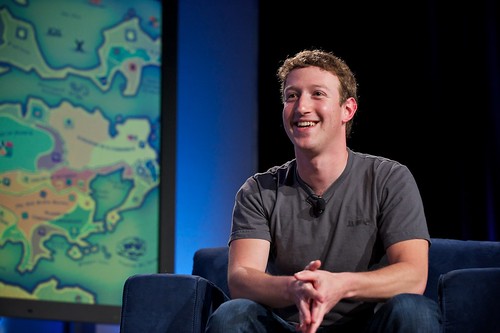 3. Social Is the Killer App. While you’re pondering question 2, consider this one. Mark Zuckerberg was poised and mature in a nearly one-hour interview with John Battelle and Tim O’Reilly. The Facebook founder acknowledged that great power carries great responsibility and pledged to be more responsive to the privacy concerns of members.
One memorable point he made is that “social” is a powerful feature of software. Several Facebook applications, like photo albums, were functionally weak in their early versions but were a huge hit with members because they were easily shareable, he noted. This is an important point to remember. Loading up on features quickly reaches the point of diminishing returns. Adding the ability to share, reuse, mash up and comment creates a whole different level of value.
BTW, Zuckerberg reminded me of a young Bill Gates in looks, mannerisms and the clarity with which he sees complex issues. Like Gates, he has an uncanny ability to find a logical path to a decision or point of view. It will be interesting to watch his star rise.
4. Simulations Are A Powerful Incentive To Engage. Did you know that 320 million people have played a Zynga game and that the company now employs 1,300 people? Have you ever even heard of Zynga? If you’re a B2B marketer, you probably haven’t, but I’ll bet your kids have. Farmville is a mega-hit on Facebook and Zynga has nine other social gaming applications based on classic games like poker and Battleship, even a Critical Ops download for PC. Founder Mark Pincus said the company has peak usage of more than three million concurrent users. Yow.
Why should you care? Because simulation games are not only a great way to learn but also an excellent tool for modeling business processes. Consider Cisco’s myPlanNet, a game that challenges players to build a business as the CEO of an Internet service provider. It has racked up more than 75,000 Facebook fans and 50,000 downloads for what is essentially a B2B training and marketing tool. Check out the wall posts on Facebook. It’s not the usual gaming trash talk. Players are learning how the Internet works.
IBM recently released CityOne, a game that simulates sustainable urban planning. These are tools that put real problem-solving scenarios in a gaming context and they are having enormous success. Can a sim fit in with your digital marketing plan?
 5. Everything on the Web. Steven Berlin Johnson gave a brief but provocative talk about the rate of change in publishing. “For the first time in 20 years, the link and the URL are losing market share,” he said, noting that there is no standardized way to link to the page of a digital book.
Johnson proposed an idea he called “Web redundancy:” Every digital content asset should have a corresponding linkable version. “Unless [publishers] embrace Web redundancy as a strategy, all those extraordinary words will continue to live in the remote continents of the unlinkable,” he said.
I was reminded of all the press releases I continue to receive by e-mail that have no online corollaries. This is old-media thinking. Why ask the reporter to rewrite your words when it’s simpler to link to them? Why forego the search engine optimization benefits of an inbound referral, especially when tweets and links are the means by which people increasingly publish information?
This year’s Web 2.0 Summit was streamed in its entirety. The conference, which is in its seventh year, is a great way to tap into the trends that will define the next 12 months. If you can’t fork over the $4,200 (and thanks to John Battelle and my friends at Procter & Gamble, I didn’t have to), it’s worth tuning in to the YouTube archive or watching the streamed coverage from next year’s event.
I had a chance to attend the recent <a href=”https://www.web2summit.com/web2010/”>Web 2.0 Summit</a> in San Francisco and hear from of the business leaders of the new Internet, including the CEOs of Google, Facebook, Yahoo! and Twitter. Here are five key insights I took away.
<strong>1. Make Marketing a Service to Customers -</strong> I didn’t write down who said this, but the comment stuck with me long after the conference was over. The traditional role of marketing has been to create an image or deliver a message. Service had little to do with it. But in the new world of tuned-out customers, the only way to get make an impression is to be helpful, entertaining or memorable. This is one reason we’re seeing a race by B2B marketers in particular to give away tactics and information that were once their source of competitive advantage. It’s the only way to get prospects to pay attention. Marketers need to ask themselves a new question: “How can I help?”
<strong>2. You Need a Mobile Strategy, and Faster Than You Probably Thought.</strong> Forrester Research now predicts that smart phones will be the dominant Internet access device in the US within three years. Mary Meeker of Morgan Stanley sees smart phone shipments surpassing PCs in 2012 (<a href=”https://www.youtube.com/watch?v=7yL9yrttESI”>Here’s the video of her terrific presentation</a>). In countries like China, the PC was never even much of a factor. The speed at which this shift is occurring is breathtaking. Smart phones have eclipsed all other electronic devices in their rate of adoption (see chart below).
<p style=”text-align: center;”><a href=”https://gillin.com/blog/wp-content/uploads/2010/11/Meeker_Smartphones.png”><img class=”aligncenter size-full wp-image-2432″ title=”Meeker_Smartphones” src=”https://gillin.com/blog/wp-content/uploads/2010/11/Meeker_Smartphones.png” alt=”Smart Phone Growth” width=”500″ /></a></p>
Google’s Eric Schmidt <a href=”https://www.youtube.com/watch?v=AKOWK2dR4Dg&p=2737D508F656CCF8″>made an interesting point</a>: smart phones are actually more useful than PCs because they know more about the user, including location, and can deliver a more personal level of utility.
This doesn’t mean PCs are going away. Rather, the plunging price of flat-panel displays will make PCs more of a dashboard for a user’s business and entertainment needs. However, the browser will be only one of several ways people will access the Internet.
On the smart phone, that access will be by applications. Apple opened the iPhone to developers only three years ago, and already more than a half-million apps have been delivered. Other platforms are just ramping up their own app ecosystems.
There is a huge free-for-all coming in mobile apps, and nearly every business needs to be thinking about how to participate. Consider item 1 above. How can you use a mobile app to provide service to the customer? Whether it’s a coupon, shopping tip, reference source, comparison engine or something else, you’ll need to address the needs of this rapidly growing mobile audience.
<strong><a href=”https://farm5.static.flickr.com/4087/5186226125_66e1323508.jpg”><img class=”alignright” style=”margin-left: 9px; margin-right: 9px;” title=”Mark Zuckerberg at Web 2.0 Summit” src=”https://farm5.static.flickr.com/4087/5186226125_66e1323508.jpg” alt=”Mark Zuckerberg at Web 2.0 Summit” width=”299″ height=”199″ /></a>3. Social Is the Killer App. </strong>While you’re pondering question 2, consider this one. Mark Zuckerberg was poised and mature in a <a href=”https://www.youtube.com/watch?v=CRUOl03nZIc&p=2737D508F656CCF8″>nearly one-hour interview with John Battelle and Tim O’Reilly</a>. The Facebook founder acknowledged that great power carries great responsibility and pledged to be more responsive to the privacy concerns of members.
One memorable point he made is that “social” is a powerful feature of software. Several Facebook applications, like photo albums, were functionally weak in their early versions but were a huge hit with members because they were easily shareable, he noted. This is an important point to remember. Loading up on features quickly reaches the point of diminishing returns. Adding the ability to share, reuse, mash up and comment creates a whole different level of value.
BTW, Zuckerberg reminded me of a young Bill Gates in looks, mannerisms and the clarity with which he sees complex issues. Like Gates, he has an uncanny ability to find a logical path to a decision or point of view. It will be interesting to watch his star rise.
<strong>4. Simulations Are A Powerful Incentive To Engage</strong>. Did you know that 320 million people have played a <a href=”https://www.zynga.com/”>Zynga</a> game and that the company now employs 1,300 people? Have you ever even heard of Zynga? If you’re a B2B marketer, you probably haven’t, but I’ll bet your kids have. <a href=”https://www.farmville.com/”>Farmville</a> is a mega-hit on Facebook and Zynga has nine other social gaming applications based on classic games like poker and Battleship. <a href=”https://www.youtube.com/watch?v=81F1qSOq3cs&p=2737D508F656CCF8″>Founder Mark Pincus said the company has peak usage of more than three million concurrent users</a>. Yow.
Why should you care? Because simulation games are not only a great way to learn but also an excellent tool for modeling business processes. Consider <a href=”https://www.cisco.com/web/solutions/sp/myplannet/index.html”>Cisco’s myPlanNet</a>, a game that challenges players to build a business as the CEO of an Internet service provider. It has racked up <a href=”https://www.facebook.com/pages/Cisco-myPlanNet/153538644090″>more than 75,000 Facebook</a> fans and 50,000 downloads for what is essentially a B2B training and marketing tool. Check out the wall posts on Facebook. It’s not the usual gaming trash talk. Players are learning how the Internet works.
IBM recently released <a href=”https://www-01.ibm.com/software/solutions/soa/innov8/cityone/index.html”>CityOne</a>, a game that simulates sustainable urban planning. These are tools that put real problem-solving scenarios in a gaming context and they are having enormous success. Can a sim fit in with your digital marketing plan?
<strong><a href=”https://farm5.static.flickr.com/4131/5181217508_9e1c9f2be7.jpg”><img class=”alignleft” style=”margin-left: 9px; margin-right: 9px;” title=”Steven Berlin Johnson at Web 2.0 Summit” src=”https://farm5.static.flickr.com/4131/5181217508_9e1c9f2be7.jpg” alt=”Steven Berlin Johnson at Web 2.0 Summit” width=”250″ /></a>5. Everything on the Web. </strong><a href=”https://stevenberlinjohnson.typepad.com/about.html”>Steven Berlin Johnson</a> gave a <a href=”https://www.web2summit.com/web2010/public/schedule/detail/15397″>brief but stimulating talk</a> about the rate of change in publishing. “The the first time in 20 years, the link and the URL are losing market share,” he said, noting that there is no standardized way to link to the page of a digital book.
Johnson proposed an idea he called “Web redundancy:” Every digital content asset should have a corresponding linkable version. “Unless [publishers] embrace Web redundancy as a strategy, all those extraordinary words will continue to live in the remote continents of the unlinkable,” he said.
I was reminded of all the press releases I continue to receive by e-mail that have no online corollaries. This is old-media thinking. Why ask the reporter to rewrite your words when it’s simpler to link to them? Why forego the search engine optimization benefits of an inbound referral, especially when tweets and links are the means by which people increasingly publish information?
This year’s Web 2.0 Summit was streamed in its entirety. The conference, which is in its seventh year, is a great way to tap into the trends that will define the next 12 months. If you can’t fork over the $4,200 (and thanks to John Battelle and my friends at Procter & Gamble, I didn’t have to), it’s worth tuning in to <a href=”https://www.youtube.com/user/OreillyMedia”>the YouTube archive</a> or watching the streamed coverage from next year’s event.
I was delighted to participate in a panel with Jason Falls, C.C. Chapman, Chris Brogan, Brian Solis and Mike Lewis at the Inbound Marketing Summit last week. Here’s the full 37-minute panel. It got pretty heated at a couple of points. This group is passionate about discarding old assumptions.
If the video below doesn’t play for you, click here to view it on the Visible Gains site.

Notice Those Ads on Blogs? Regulators Do, Too – NYTimes.com
The National Advertising Review Council is calling for clear disclosure from bloggers who are paid for product reviews or whose work is sponsored by companies they blog about. However, some people think the guidelines go too far. For example, they would require a blogger to disclose in a product review that the product had been provided free by a vendor. Such disclosure has never been practiced by traditional media companies.
You are SO unfollowed! – Scobleizer
Robert Scoble un-follows 106,000 people in one shot and says he’s relieved. Perhaps we’re beginning to see the backlash against social media over-exposure. We shouldn’t become a victim of the need to constantly communicate.
Managing beyond Web 2.0 – McKinsey Quarterly
What happens when consumers’ shared experiences are more interesting than anything your marketing department can provide? Marketers have to learn the tools of interaction in order to adapt to conversations going on outside of their control. Those consumer experiences can also yield valuable ideas for marketing programs that reflect what the audience really wants to talk about.
The article cites the experience of GlaxoSmithKline, which dealt with consumer confusion over its Alli weight-loss drug by setting up the My Alli community site to support discussion, videos, FAQs and a membership plan to aid in weight loss. This wrapped useful information (and a marketing message) in a warm and friendly environment.
Four useful tools for social networkers – Strominator
David Strom reviews four online services that increase the productivity of active contributors to social media. I particularly like Pixelpipe and Tr.im.
Beware Social Media Marketing Myths – BusinessWeek
BusinessWeek’s Gene Marks skewers some common misconceptions about social networks. They’re not free, he says. In fact, they require a significant investment of time. And you won’t necessarily find customers there. He also advises business owners not to spread themselves too thin. If you find a platform that works, put your efforts behind that one. Good advice, if not necessarily groundbreaking.
Pepsi Sees a Chance to Fill Newspapers’ Void – BrandWeek
BrandWeek interviews Bonin Bough, PepsiCo’s new social media director. He’s spearheading a broad and deep push into all kinds of channels that enable customers to interact with the company and create their own content. PepsiCo is actually sponsorsing bloggers to cover some trade shows, effectively setting the company up as a competitor to newspapers. Bough has some nice sound bites. “If you really think about it, it’s the largest broadcast network in the world, and in such a short amount of time, too. People are willing to share if they are given a structured opportunity to do so.”
The One Word You Can’t Say: Campaign – MediaPost
“The word ‘campaign’ has become the pariah of social marketing,” says MediaPost. “Preferred alternatives include terms like ‘program,’ ‘initiative,’ or even ‘conversation.’” This article speaks truth. The old 13-week campaign doesn’t work in a conversational medium. You need to build relationships, and that takes times. The good news? Relationships can last for many years.
Still, this new reality challenges conventional thinking and standard operating procedure. For one thing, agencies are paid to create campaigns with defined beginnings and ends. How do you compensate the agency for open-ended conversations? Also, the beneficiaries are likely to extend beyond the marketing department, which means that organizations need broad-based buy-in to make social media “campaigns” successful.
 If you watch the Boston Marathon next Monday, keep an eye out for Jason Jacobs. He should be pretty easy to spot; he’ll be the one dressed as a giant iPhone.
Jacobs is the founder of FitnessKeeper, Inc. , which sells the RunKeeper iPhone application. RunKeeper uses the iPhone’s built-in GPS to track how far and how fast people run, walk, cycle and whatever. They can then share their numbers wit h friends.
The marathon idea came about after a pitch from some students at Emerson College three weeks ago. In Jacobs’ own words, here’s why he’ll be dressed as an iPhone:
With RunKeeper, we have been really big on “humanizing the brand” (check out @runkeeper on Twitter), and what better way to humanize the brand than to have a giant iPhone with RunKeeper on the screen actually running in the marathon?
We partnered with a team of undergrads in a social media class at Emerson College to help us put together a marketing campaign. They pitched me on the idea with only 3 weeks before the marathon, and I fell in love with it right away.
We jumped into action immediately. By the next morning, I had a marathon number (VERY hard to do), and we’ve been scrambling ever since to line up tshirt and other vendors, get the costume built, plan all of the race day logistics, build awareness in the community, etc. etc. And this is all while training for the race (typically an 18-week ordeal) in 3 weeks time. Even better is that we have been filming the entire process!
The plan is to launch a series of viral videos leading up to and immediately following the race, which document the prep for this campaign from soup-to-nuts, as well as the outcome. Think Apprentice meets Real World meets Behind-the-Music.
It’s a great idea, although there’s only one video at the moment and it isn’t exactly viral quality. Jacbos is also raising money for Spaulding Rehabilitation Hospital, which is a worthy cause.
I hope this works. It’s gonna be hot in that iPhone suit!
If you haven’t seen it yet, check out this fantastic viral video from Disney Parks & Resorts. Parks VP for Global PR Duncan Wardle told me the promotion paid for itself in about 18 1/2 hours measured by the bookings it generated. Since then, it’s been shared by millions.
Personalization, wow! factor and easy shareability were the keys. Be sure to watch till the end and listen for Goofy. This is cool stuff.
Social Media Wins In Marketers’ ’09 Plans
A survey of 196 subscribers to a content marketing newsletter (all right, it’s clearly a biased sample) finds that social media and content marketing will be the big winners in the advertising recession this year. “More than half–56%–of marketing and publishing decision-makers plan to increase their content marketing spending next year.” Only 13% plan to decrease it.
Generation Y goes to work – The Economist
The popular perception of Generation Y or “Millennials” is that they expect the world to beat a path to their door. Not true, says this piece in the Economist. Gen Y members actually have many of the same aspirations and motivations their parents did. The deteriorating economy is forcing them to work harder, but they’re up to the task. And they have multi-tasking and online skills that could benefit businesses in many ways.
If you follow the search world closely, you’ll probably know most of these tips, but there are some hidden gems in there, particularly about the importance of quality content and useful inbound links.
For a given set of pages, PageRank may fluctuate, and rankings do shift as the internet evolves. But in the end, what’s most important is consistently happy users: people who bookmark and share your site, who understand and respect your brand and who can confidently and seamlessly make that purchase.
Watch Free Documentaries – SnagFilms
From Ted Leonsis: Snagfilms is really scaling– we hit 20k affiliate sites that have snagged a virtual movie theatre widget and have reached 100 plus million uniques–since our launch in late July. Check it out and snag a widget today.
How to create your own Personal Brand?
This is a great podcast. Paul Dunay speaks with Dan Schawbel the author of the Personal Branding blog as well as the forthcoming book Me 2.0: Build a Powerful Brand to Achieve Career Success. He’s got lots of good advice for building your personal brand online, syndicating yourself and finding new channels to build awareness.
Paul Dunay’s list of C-level executives who use Twitter, including Richard Branson, George Colony, Tim O’Reilly and others. Still too many geeks and not enough mainstream brands here, but it’s coming along.
Nobody cares about your product, and that’s okay! | More Than Marketing
Todd Van Hoosear sums it up nicely. “Your job isn’t to get people to care about your product. Your job is to make it easy for a potential client to understand how your organization can help solve a problem.” Your Web presence shouldn’t be all about you; it should be all about your visitors.
Paul Dunay has links to some good reading on the question of whether brands should use Twitter, as well as a list of about 70 brands that do. Readers contribute several more.
Gizmo’s Desert Island Utilities – Best PC freeware
The best free productivity and protection software for your PC
From my weekly newsletter. To subscribe, just fill out the short form to the right.
At this time of year, many publishers and bloggers do one of two things: look ahead at the future or back at the year just ending. Since Joe Pulizzi, Fast Company and iMedia Connection did a great job at social media predictions, I thought I’d rummage through my digital archives and offer my completely unscientific list of what made this year special for me.
Best Social Media Tool – That’s easy. It’s Twitter, the super-simple, deceptively powerful micro-blogging service that has people sharing their lives in 140-character increments. If you still don’t get Twitter, I feel your pain, but anyone who wants to practice marketing in the new media world needs to get with the program. If you need help, I’ll get on the phone with your people and tell them why it’s so important.
Best Social Media Disaster Story — Johnson & Johnson’s well-intentioned Motrin video turned into a PR nightmare thanks to — you guessed it — Twitter. To its credit, J&J earnestly listened, but the marketers’ failure to anticipate negativity and their eagerness to respond too hastily made this a bigger problem than it had to be.
 Best New Face – Chris Brogan blew out of the pack to become one of the world’s top bloggers thanks to his prodigious output and shrewd self-promotion. He’ll soon hit 30,000 followers on Twitter and the 14,600 subscribers to his blog are a thing of wonder. I don’t know when the guy finds time to sleep. I’m fortunate to work with him on the New Marketing Summit conference and have a chance to learn from his success.
Best Book – Groundswell by Josh Bernoff and Charlene Li broke new ground by attempting to apply research and metrics to social media marketing. The book also told some great stories. Conflict of interest prevents me from choosing my own Secrets of Social Media Marketing, but that shouldn’t stop you from buying it!
Best New Software Application — In the ranks of software that tries to bring order to the barely contained chaos that is Twitter, TweetDeck does the best job I’ve seen.
Best Fall to Earth – Forrester reported that corporate enthusiasm for blogging was beginning to wane. That’s not surprising; most big companies do a lousy job of it. Expect retooling and new growth in the new year.
 Best Viral Marketing Success – Cindy Gordon told just seven people about Universal Orlando’s plans to launch a Harry Potter theme park. Word of mouth spread the story to 350 million others in a matter of a couple of days. David Meerman Scott has the story.
Best New Product – The Apple iPhone 3G became the first true mobile Internet device and sold 3 million units in its first month. Expect plenty of new competition in 2009, which is only going to be good for consumers.Nokia has yet to play its cards.
Best Podcast – In the archives of the MediaBlather program that I do with David Strom, there were too many good interviews to choose just one. Among my favorites of 2008 were Mommycast, Brains on Fire/Fiskars, IDG’s Pat McGovern, Eric Schwartzman, Shel Israel and Brian Halligan of HubSpot. I think the most interesting podcast I listened to all year was Schwartzman’s interview with search-engine optimization expert Russell Wright.
Most Useful Blog Entry – Interactive Insights Group created a superlist of organizations using social media. You can find practically any case study on the Web by starting there. We have yet to hear what Tamar Weinberg has up her sleeve, though! Her 2007 superlist was a thing of beauty.
Best Article on the Media – The International Herald Tribune’s “Web Ushers in Age of Ambient Intimacy” explained the visceral appeal of Twitter and Facebook with admirable clarity. Eric Alterman’s epic examination of the collapse of the newspaper industry in The New Yorker was magnificent in its detail and insight.
Best Just For Fun – The most popular item in my newsletter is the squib about some crazy new Web resource we’ve found. Here are two of my favorites of 2008:
 People always celebrate success, but they don’t give enough credit to really creative failure. Thank goodness, then, for The Fail Blog, a photographic tribute to failures big and small. Don’t look at this site in the office. Your colleagues will wonder why you’re laughing so hard. And don’t, under any circumstances, view it while you’re drinking milk, if you know what I mean…
 Buddy Greene is the Yo-Yo Ma of the harmonica, and in this amazing clip from a Carnegie Hall concert, he will change forever your impressions of the capability and range of this tiny instrument.
I’ve recently conducted a couple of online seminars about social media topics. The Q&A sessions at these events are almost always too short to get to the issues that are on people’s minds. So over the next few issues of this newsletter, I’ll run down a few of the best questions I didn’t get to. For a good, free webcast on this topic, check out the recent event sponsored by Listrak.
To subscribe to my weekly newsletter, just fill out the short form to the right.
Q: What is the best way to find blogs that are applicable to your business?
A: I have half-day seminars that address this question, but I’ll try to be succinct! First of all, remember that a blog is simply a way to display information. There is no industry standard definition of a blog, so the only way to identify one is by looking at it. Even the search engines that specialize in blog search don’t always get it right.
That said, you should start with search. The blog search tools I use are Google Blog Search, Technorati, IceRocket, Bloglines and Blogpulse. There are others, but I’m less familiar with them. Tip: Use advanced search; it will save you time and better refine your results.
When you find bloggers who look important to you, look in their blogrolls, which are lists of other bloggers that they pay attention to. Blogrolls can usually be found on the home page. This can save you a lot of time because the bloggers have already done the searching for you.
I also recommend searching social bookmarking sites like Delicious and Reddit. People share and comment upon favorite bookmarked pages there. Very often you’ll find sites on social bookmarking services that don’t show up prominently in search engines.
Q: Can you review the different social media for different communication goals?
A: Chapter 2 of my latest book, Secrets of Social Media Marketing, goes into quite a bit of detail about this, but here’s a synopsis:
Blogs: Easy, fast and flexible. Think of them as a podium. You’re the speaker and you can say your peace and invite commentary. Blogs are good for telling a story, but not very good for interaction or conversation.
Podcasts: These are basically audio blogs. They’re very good for communicating a message but have almost zero interactivity. Podcasts are very popular with busy executives who like the efficiency of being able to learn when they can’t read. They’re basically a one-way medium, however.
Video podcasts: Good for telling a story visually, but people tire of them quickly if the content isn’t compelling. Video podcasts are excellent vehicles for humor or offbeat content. They have almost no interactivity. Think of them as TV commercials that viewers can easily share with each other.
Social networks: These are great places to listen to ongoing conversations and to gain insight on customers and markets. You can also use them to pose general questions about you market. Don’t be too specific, though; social networks are public forums. Popular topics can yield insight into new product possibilities.
Private Communities (for example, Communispace and Passenger): These are next-generation focus groups. Usually run by firms that specialize in community management, the members are hand-selected, carefully nurtured and often bound by confidentiality agreements. Private communities are a great way to get advice from a lot of perspectives in a hurry. The downside: high cost
Microblogs (for example, Twitter and a host of others): Very fast, targeted and responsive, they’re a great way to ask questions and get quick answers or to promote a timely idea or service. Interactivity is excellent, but content is limited to short messages and it’s difficult to integrate multimedia.
Virtual worlds (for example, Second Life and others): These venues may be good for real-time events, but the software is still too clunky for most people to use. Virtual worlds fare best with techie audiences. They’re unique in that you can observe group dynamics, such as facial expressions and body language. They’re also good for events with a strong visual component.
Q: We run a lodging resort and saw negative comments someone had posted about their experience here on their blog. How do you turn a negative blogger into a positive blogger?
A: The tactics that work in the physical world also work online: invite feedback, listen, confirm what you heard and offer some kind of relief or explanation. In 80% to 90% of these situations, the naysayers can be neutralized or even turned into advocates with these tactics. Since bloggers can’t see their audience, they tend to write in strong terms, sort of like shouting into the wilderness. Once you personalize the interaction, they usually back down. Start by commenting on the blog and also by sending a private e-mail. It may even be worth picking up the phone. The more you humanize the interaction, the quicker you’ll bring them around.
How word of mouth helped launch Kraft’s cream cheese
This 49-minute podcast from iMediaConnection’s Brand Summit interested me not so much for the marketing case study (although it’s a very good example of viral marketing) as for the honest description of the barriers these two Kraft brand managers confronted in selling their word-of-mouth marketing campaign. You won’t often hear corporate marketers speak so frankly about internal politics.
The groundswell gives Motrin a headache
Josh Bernoff has a nice wrap-up of the blog/Twitter/Facebook storm that erupted this past weekend over J&J’s ill-considered “Motrin Moms” ad. The company could have avoided the whole mess by testing the ad with a group of moms, who are some of the most active online networkers. Such a simple way to avoid embarrassment and the cost would have been minimal. Now J&J’s smarting from the whole experience. McNeiil’s VP of marketing has the mea culpa here.
Visa uses Facebook network to reach small businesses
The credit company is experimenting with a Facebook community that offers small business owners a way to connect with each other and to get business management advice from Visa. More than 21,000 members have joined and the repeat-visit rate is twice the industry norm.
Here’s a novel promotion for the forthcoming movie “The Day the Earth Stood Still.” 20th Century Fox is creating a global participation campaign that enables people to vote on what they would save if the earth truly stood still. From the press release:
Earth’s Vital List, which launches today, poses the question, If the earth was under attack what would you save? Consumers are asked to build a “Vital List” of 12 items (people, places or things) they would save on “the day the earth stands still.” Vital lists can be shared with friends encouraging feedback and votes on which items are truly vital. The world’s most vital items will be tabulated on a global microsite. The site also provides visitors with a view on how items are being ranked around the globe.
A countdown to the film’s US release (12/12/08) will coincide with a special reveal of the world’s 1,212 most prized possessions on MySpace.com/earthvitallist.com.
I recently criticized corporate bloggers for spewing happy talk while the financial world melted down. So it was nice to see this profile of Marcy Shinder, VP of brand marketing and stategy for American Express OPEN. Amex responded quickly to the Wall Street crisis with a series of articles and multimedia messages aimed at small-to-medium businesses and outlining what the crisis means to them as well as steps they can take to survive the downturn.
The Viral Video Marketing Dilemma
Metrics expert Mark Ghuneim suggests that we still have a long way to go in evolving our thinking about viral video metrics beyond view counts. Marketers are beginning to think more holistically about how to measure success. Quoting:
According to a recent FEED Company study, some 70% of ad-agency and media-buying executives plan to increase budgets for viral video marketing in 2009. In addition, 72% of ad-agency executives and media buyers say their clients are “interested” or “very interested” in using viral video as an integral part of their marketing campaigns….
“Favoriting,” commenting, linking to, embedding, social network amplification and other action all constitute a level of user attention that must somehow be accounted for and given appropriate value.
In addition, a marketing executive would also want to know how users were discovering their video, as well as how quickly the view counts were growing. The velocity of consumption and adoption is an important indicator as well as factors beyond the standard impression and stream data. For example, are bloggers talking about the video? Are users micro-blogging about the video?
LinkedIn cuts 10 percent of its workforce
With an average member earning about $110,000 a year and more than $100 million in investment capital in the bank, you’d think LinkedIn would be sitting pretty. Yet the company is laying off about 36 people. Smart move. Don’t let VC love make you fat and happy.
Yahoo’s Yang Has No Regrets — He Should
Om Malik has little nice to say about Jerry Yang’s stewardship of Yahoo. Yang now basically admits he should have sold to Microsoft when he had the chance and the collapse of a partnership with Google is particularly painful. With the economy now in the tank, what’s next?
The Vote: A Victory for Social Media, Too
BusinessWeek is all breathless about the energy that social networks brought to election day, and there are some good stories/examples here. However, listen to NPR’s story on turnout levels for a more sobering view. Turnout was good for the US, but we still lag far behind other democracies.
Google Aims To Predict Flu Outbreaks
Privacy advocates may blanch, but I think this is a totally cool way to mine patterns from search behavior that contributes to the common good. What an innovative idea!